
Our voices
How to tell your story: HIV activism is grounded in storytelling – using lived experience and personal stories to build shared values and drive the change that matters to us.
One principle
Stories about people living with HIV must be told with us, by us and for us.
- Speaking out is a political act; it breaks down stigma, puts a human face to HIV and counters negative narratives. We also have the right to not tell our story and to refuse to answer inappropriate questions. We should never be asked (or offer) to tell our story for no reason.
- People connect more deeply to personal stories than just facts and figures. They are persuasive and, in this way, bring change.Positive Voices uses volunteers living with HIV to share their stories to encourage a better understanding of HIV. HIV Voices uses creative writing and performance to explore what it means to live with HIV today.

“I told my story to a mainstream newspaper, trusting them to publish a positive story. Instead they twisted the headlines to make it clickbait. Trolls wrote so many nasty comments on what was meant to be a positive and informative piece. It was heart-breaking. I was first approached via Facebook and looking back I should have used the media team at THT or another HIV charity to ensure this didn’t happen.
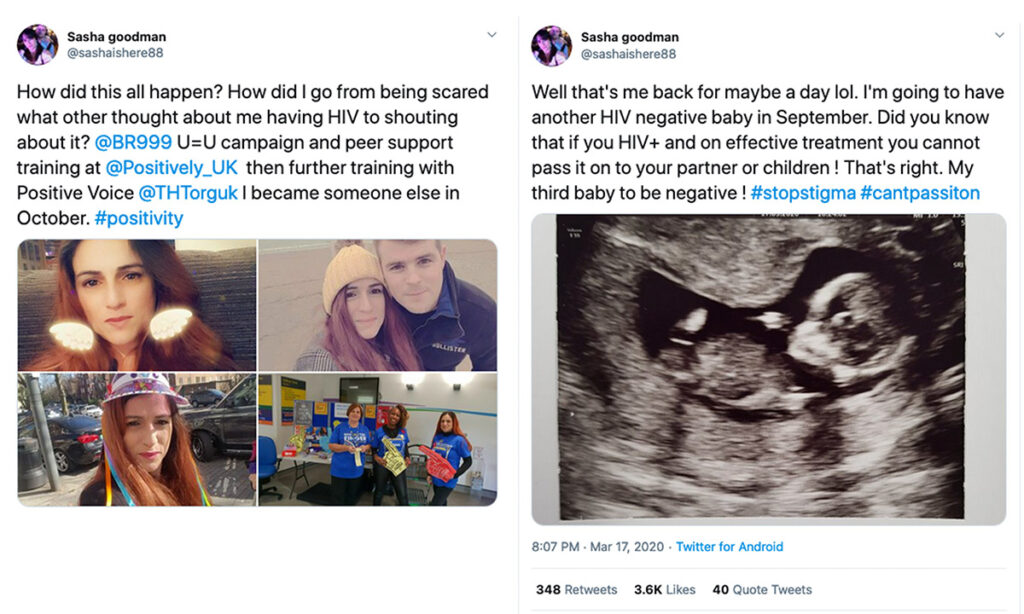
The positive side was all the local, national and even worldwide support I got. I felt so relieved and a weight was lifted. I messaged all the people who had trolled me with the facts about HIV, including the U=U message. I am so proud of how far and wide the message went and that my story has helped so many.” – Sasha Goodman
“I feel self-empowered by sharing my story. It helps to dispel myths, challenge stigma and normalise HIV. It takes courage to share and advocate for your own rights. It’s a personal journey of activism.” – Mina

- Telling your story can be empowering as long as you are heard, validated and supported. It can also leave you feeling exposed and vulnerable. If you are telling your story in public or in the media, have someone you can call or meet to prepare and practice and support you afterwards.
- Many journalists and editors will be happy to help you tell your story, but some might be more concerned with something that grabs headlines or gives people the wrong idea about HIV. If you’re approached by a journalist or are approaching one, have a look at other stories they have written and see what tone they like to strike around social justice issues.
- Avoid telling your story to get it off your chest. Be more strategic and shape your story to get across a key message. Watch John, Sarah and LeaSuwanna talk about living with HIV and how we need to change perceptions about it.
- In interviews, have the confidence to not answer intrusive questions and to steer the conversation to what you want to talk about, for example, your key message. As preparation, role-play this with a friend or fellow activist. Listen to Silvia Petretti and Doreen Moraa Moracha talk about going public with their HIV status. Silvia starts with why she does not talk about how she got HIV.
- Use personal experience to shift negative narratives. This can also buffer us from being re-traumatised by painful memories. Watch Becky Kroger talk about taking medication. She dispels the myth that we are victims with her attitude to taking treatment.
- Back up a key message with facts or other people’s experiences to show that yours is not a one-off. Read Ant Babajee’s activism story on the blogging platform Medium. He mixes personal experience with facts and figures and ends with a call to action.
- If you are using someone else’s story, always get permission. Avoid mentioning anything that could identify someone, such as the town they live in or where they study. Never change a person’s story or experience to fit what you want to say.
“Everyone can make a difference. Just telling one person — it could be your bestie; it could be a colleague; it could be your mum — makes a difference and is the start of your journey. Coming out publicly as living with HIV has been the most empowering thing I have ever done. I see myself as fortunate to have got to a place where I feel safe and supported enough by my friends, my family and my colleagues to speak out.” – Ant