Rise Up
Nothing about us without us
The HIV movement is a diverse and courageous community that spans the globe. It fights for the rights of people living with HIV to live in safety, with dignity and equitable access to healthcare and the support we need.
Five facts
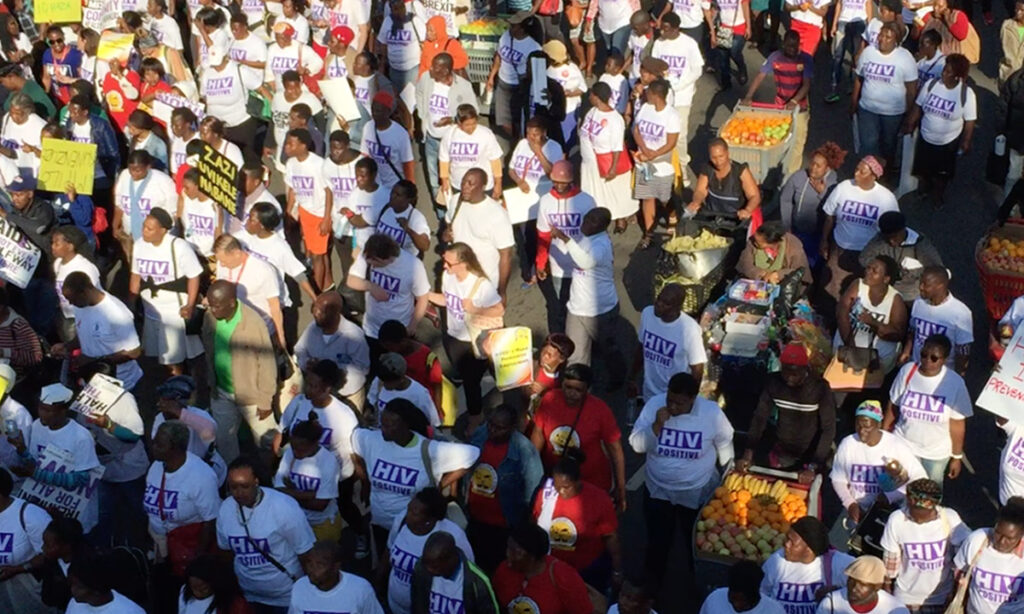
- The founding principles of AIDS activism were set down by people with AIDS in the 1983 Denver Principles. The 11 principles are about self-empowerment and rights and still guide us today.
- This activism was often led by members of the LGBTQ community. It built on activism through the 1960s and 70s for gay liberation, transgender rights, civil rights, women’s rights and reproductive rights, to name a few.
- AIDS Coalition to Unleash Power (ACT-UP) used direct action to demand access to HIV drugs. Watch a short clip of the film United in Anger here
- Africa has a powerful history of action on access to affordable treatment led by the Treatment Action Campaign (TAC). Watch a clip from the documentary Fire in the Blood here.
- The other guiding principle is GIPA, which stands for the Greater Involvement of People Living with HIV/AIDS. It commits organisations, governments and policy-makers to meaningfully involve us in decisions that affect our lives so that they are based on our voices, experiences and priorities. This is why the HIV movement adopted the disability rights slogan ‘Nothing about us without us’.

“At first, I wanted to understand my own HIV treatment. That then led me to realise the importance of having my voice heard. Nothing for me without me.” – Ben

Whose voices?
Oppressions like ageism, racism, sexism, homophobia and transphobia serve to silence and marginalise us by making us less likely to be listened to or believed. Criminal laws relating to sex work, drug use and in some countries homosexuality, may also prevent people from speaking out. Overlapping (often called intersectional) identities such as gender, ethnicity, class, sexual orientation and disability amplify these effects.
It is crucial that those of us with any unearned advantage, such as being white or male or from a high socio-economic background, wake up to our privilege and use it to make the systems we were born into fairer. This does not mean speaking for others but rather making space for those who have been marginalised and speaking with them to amplify their voices.
We are all bound together and we will not end the HIV epidemic unless we rise together. Watch a clip of the film Nothing Without Us: The Women Who Will End AIDS here.
Did you know?
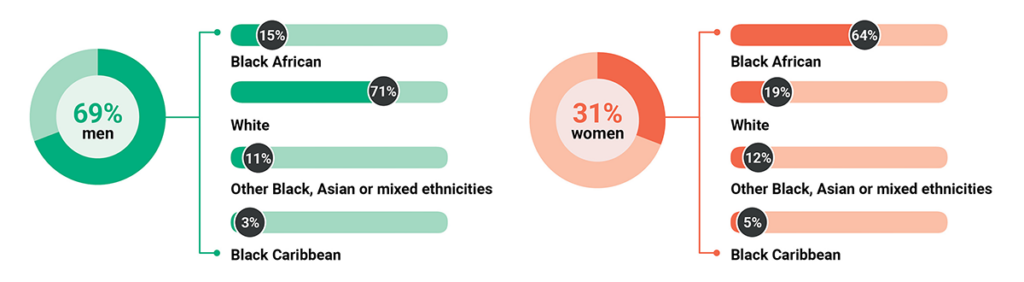
Roughly a third of people accessing care for HIV in the UK are women and of them, 64% are Black African. Nearly half of all people accessing care for HIV are from BAME communities. These figures come from Public Health England, you can find them here. National AIDS Trust (NAT) also has useful facts and figures here.
People living with HIV in the UK, 2018

“I believe in fair representation and giving a voice to the marginalised. It’s about speaking up when you see an injustice – everyday activism.” – Joshua
“When I had one-to-one counselling, I began to turn my attention from myself and towards helping others. From there I started volunteering and I could see what is still needed. I’ve realised that activism is using my voice for those who are voiceless.” – Sheila
A way to go
Although we have made great progress through our activism and involvement, there is still a long ways to go to end the UK’s HIV epidemic and secure good quality of life for people living with HIV. Statistics and stories from the Positive Voices survey support this and you can use them in your activism. Find them in the Changing Perceptions reports.
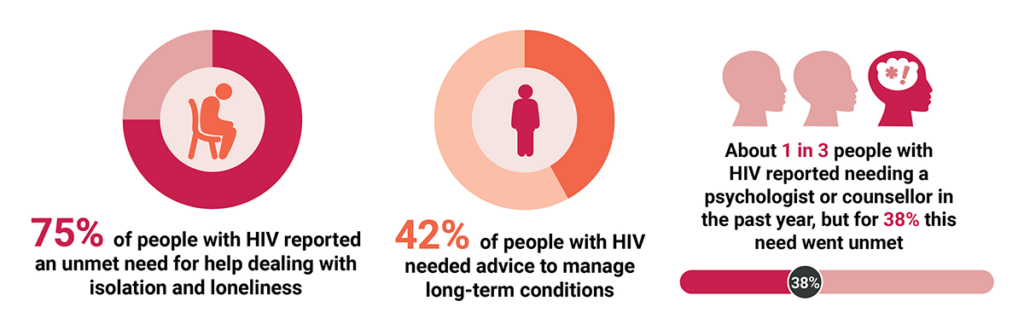
Action on HIV includes pushing for peer support, securing services for mental wellbeing, getting to zero stigma, demanding PrEP, ending violence against women, fighting inequality and oppression.
We use our activism to:
- change negative attitudes and challenge stereotypes
- shape and guide policies and research
- demand the resources and services that we need to live fulfilling lives
- stand up for others who are at risk if they speak out
- speak out against injustice – when one of us is harmed, we all are!
- hold leaders to account
- reform, repeal and change laws and regulations that discriminate or criminalise