Financial support and advice
Help with financial advice
Financial instability affects many people living with HIV – 46% of women
and 32% of men live at or below the poverty line (less than £20,000 annualhousehold income). The need to access welfare benefits is crucial for many people living with HIV to meet their costs of living – 56% of women and 30% of men with HIV are in receipt of some sort of means-tested benefit.
One in eight (13%) people with HIV are in receipt of housing benefit, 13% get Employment and Support Allowance (ESA) or Incapacity Benefit, and 15% get Disability Living Allowance (DLA) or Personal Independence Payments (PIP).
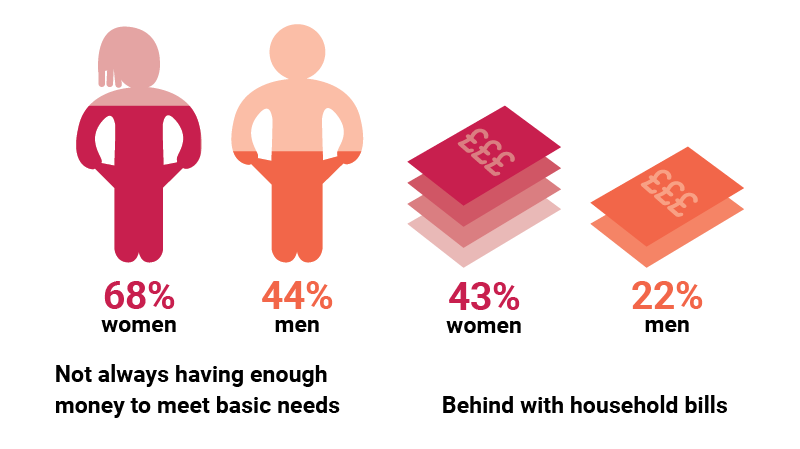
Yet, 68% of women and 44% of men said they do not always have enough money to meet their basic needs (eg utilities, food, rent), and 43% of women and 22% of men are behind with household bills. This is supported by the high unemployment rate for people with HIV – 2.5 times the UK average over the same time period in 2017 (11% vs. 4.5%).
Navigating the benefits system can create fear and anxiety. Many struggle to access the benefits they are entitled to, especially with the UK benefit system undergoing such big changes. A NAT review of the new PIP system raised significant concerns with how eligibility is assessed and how suitable the approach is for people living with HIV.
The report found that the assessment criteria fail to consider issues relevant to people living with HIV, such as treatment adherence and the impact of living with a fluctuating condition.
The NAT review also found that the assessment process itself was a source of great stress. In the Positive Voices survey, 20% of people needed help claiming benefits and 16% needed financial advice – but an alarming proportion of this need was not met. Nearly half (48%) of the need for help claiming benefits was unmet and two-thirds (64%) was unmet for financial advice.
Nicholas took his appeal to tribunal. He is not alone. In 2016/17 almost 300,000 cases went through reconsideration by the Department of Work and Pensions (DWP) and 107,645 cases were appealed at tribunal.
In 65% of tribunal cases, DWP’s original decision was overturned; this only happened in 15% of DWP appeals of new claims (as opposed to reassessments).
Not everyone is in a psychological or financial position to take this matter to court and HIV-related stigma may also act as a barrier to challenging decisions. High quality advice and support is vital.
What needs to be done?
- The advice and support that people living with HIV need in order to access the financial support they are entitled to must be funded. These services are vital in preventing the negative impact that financial insecurity and claiming benefits can have on our health and wellbeing.
- Too many people are having to fight for the benefits they are entitled to.The system needs to learn and adapt. People living with HIV and other long-term conditions should be involved in assessing how well the benefits system works and ensuring that it is fit for purpose.
Talking about HIV and our needs report
To view the Changing Perceptions report regarding HIV and our needs please click on the Download below.